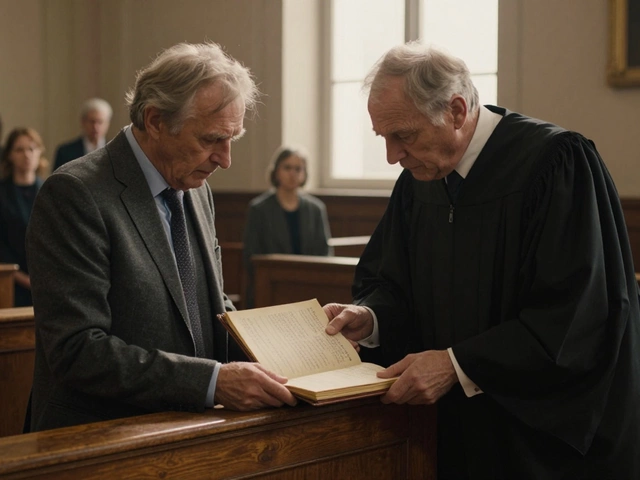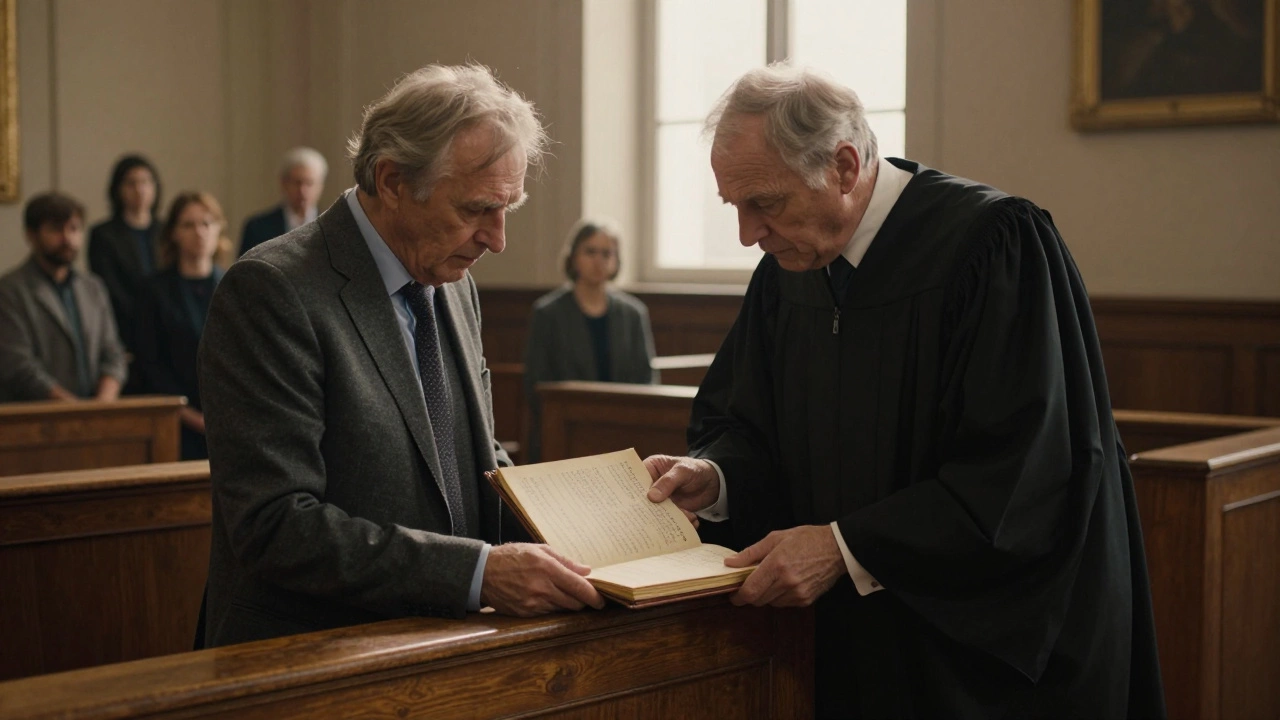
When a person dies, their last wishes are supposed to be honored. But what happens when those wishes involve sex? Not just any sex-public displays, secret relationships, or arrangements that blur the line between love, commerce, and consent? Courts across Europe and North America have been forced to rule on cases where intimacy, money, and mortality collide. One such case involved a wealthy widow who left her fortune to a man she met through an escorte maris service in Paris. She called him her companion. The family called him a gold digger. The court had to decide: was this a romantic relationship or a transactional one?
These aren’t rare outliers. In France, Italy, and Germany, courts have handled over 200 cases since 2018 where the deceased’s intimate relationships-especially those involving paid companionship-were contested by heirs. The legal system isn’t built for this. Inheritance laws assume family ties, not hired affection. But modern relationships don’t fit neatly into old boxes. People form deep bonds outside marriage. They pay for companionship. They write wills. And when they die, the law scrambles to catch up.
What the Law Sees vs. What People Feel
The court doesn’t care if two people held hands at sunset or shared midnight coffee. It looks at paper: contracts, bank transfers, witness statements. If money changed hands regularly, even if labeled "gifts," the court often assumes exploitation. In one 2023 ruling in Lyon, a woman who paid €8,000 a month to a man she called her "emotional support partner" was deemed to have been manipulated. Her children inherited everything. The man got nothing. He had no contract. No emails. Just receipts for dinners and hotel stays.
But here’s the twist: the same court in Marseille ruled differently a year later. A man who received €5,000 monthly from an elderly widow for "companionship and housekeeping" was granted €120,000 because he had documented daily visits, medical assistance, and proof he was her only emotional anchor during her final years. The judge wrote: "Love doesn’t need a wedding ring to be real. But it does need evidence."
That’s the new standard: proof of presence. Not passion. Not promises. Proof.
The Rise of Paid Companionship in Modern Aging
As life expectancy climbs and families grow smaller, more elderly people are turning to paid companions. Not for sex-though that sometimes happens-but for conversation, walks, grocery runs, and someone to hold their hand during a hospital visit. These aren’t prostitutes. They’re not always young. Many are retired teachers, nurses, or artists who need income and find meaning in caring for others.
In Paris, the demand has grown 47% since 2020. Agencies now offer vetted profiles, background checks, and even psychological compatibility assessments. Some clients choose based on shared interests: classical music, gardening, or even chess. One 78-year-old woman in Neuilly-sur-Seine spent four years with a man who read her poetry every evening. She never kissed him. But when she died, she left him her entire library-and a letter thanking him for "making me feel seen again."
That’s where the legal trouble starts. The letter wasn’t notarized. The agency had no record of their arrangement. The family sued. The court dismissed the case-because there was no financial trail. But the judge added a footnote: "If the law cannot recognize emotional labor, then the law is broken."

When Death Turns Intimacy Into a Crime
Not all cases end in civil disputes. Some end in criminal charges. In 2022, a 64-year-old man in Toulouse was charged with elder exploitation after his 82-year-old partner died of heart failure. He had taken control of her finances, moved her into a small apartment, and cut off contact with her children. He claimed they were lovers. The prosecution called it coercion. The court found him guilty of financial abuse, not because he was paid, but because he isolated her.
Contrast that with a 2024 case in Bordeaux. A 70-year-old woman hired a 35-year-old man through an agency to be her companion. He visited daily. He helped her bathe. He took her to chemotherapy. He didn’t touch her sexually. She left him €500,000. Her children sued. The court ruled in his favor. Why? Because he had signed a formal agreement with the agency, kept a daily log of his visits, and had three witnesses who confirmed his role as caregiver. The money wasn’t a gift-it was compensation for labor.
The difference? Documentation. And boundaries.
The Hidden Economy of Emotional Labor
There’s a growing underground economy around companionship. It’s not illegal. But it’s unregulated. Agencies in Paris, like those offering
But without legal recognition, these relationships are fragile. If the client dies without a will, the companion gets nothing. If the family objects, the companion can be evicted from the home, even if they lived there for years. There’s no legal standing. No inheritance rights. No protection.
That’s why some lawyers are pushing for "emotional labor contracts"-written agreements that define the nature, duration, and compensation of non-sexual companionship. In Switzerland, such contracts are now legally binding if registered with a notary. In France, they’re still optional. And rarely used.

What Happens When Love Is Paid For?
It’s not about whether paying for companionship is right or wrong. It’s about whether the law can recognize the humanity behind it. A man who sits with a dying woman for three hours every day, reading to her, holding her hand, is doing something valuable. He’s not a lover. He’s not a servant. He’s a witness to her final days.
And yet, the law still treats him like a stranger. Or worse-a predator.
When a woman in Lyon left €300,000 to a man she met through an The court gave him the money. Not because he was her lover. But because he was her last human connection. As society changes, the law must change too. We don’t need new laws about sex or death. We need new laws about care. About presence. About the quiet, unpaid, often invisible work that keeps people alive until the very end. Right now, the system only protects blood ties. But what if your chosen family isn’t related by birth? What if your closest person is someone you paid to be there? Should their grief be ignored? Should their years of service be erased by a judge’s pen? There are no easy answers. But one thing is clear: the courtrooms of 2025 are hearing stories that didn’t exist 20 years ago. And they’re starting to listen. One day, a man might walk into court with a notebook full of dates, times, and handwritten notes from a woman he helped through cancer. He won’t have a ring. He won’t have a marriage certificate. But he’ll have proof. And maybe, just maybe, that will be enough. Because love isn’t always loud. Sometimes, it’s quiet. And sometimes, it’s paid for. And the law is finally learning how to see it.The Future of Love, Law, and Legacy